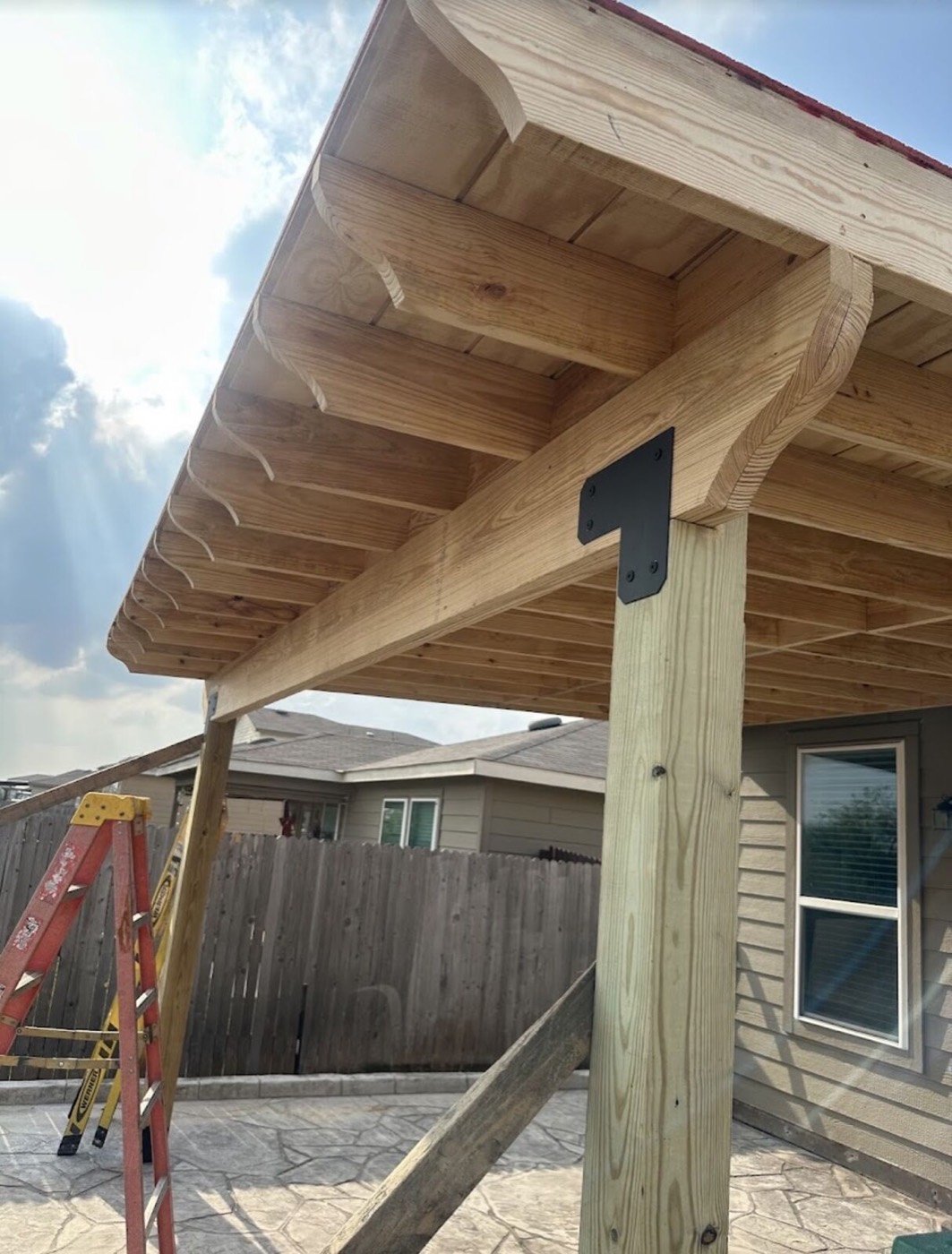
In San Antonio, a patio without shade sits empty for much of the year. A framed patio cover turns it into space you can use. Here are the main decisions.
Attached or freestanding
An attached cover connects to the house, usually with a ledger board fastened to the wall framing, and extends out over the patio. It needs a solid connection and proper flashing so water doesn't get behind the siding. A freestanding cover stands on its own posts and can go anywhere in the yard, such as over an outdoor kitchen or seating area.
Posts and footings
The posts carry the whole roof, and they need footings that won't settle or shift. With clay soil in many parts of the area, footing depth and preparation matter. The posts are anchored to the footings with hardware rather than buried bare in the ground.
Roof framing and pitch
Beam and rafter sizes depend on how far they span and what the roof will carry. Even a cover that looks flat needs some slope so rain runs off. If you plan to add a solid roof, ceiling fans, or lights later, say so up front so the framing is sized for it.
Put the shade where the sun is
Afternoon sun from the west is usually the hardest to block. Think about when you use the patio and where the sun sits at that time. Extending the cover or adding a lower beam or screen on the west side can make a big difference.
Details that show
Rafter tail cuts, post size, and stain color make a cover look like part of the house instead of an add-on.
We frame patio covers, porch steps, and walls in San Antonio and the surrounding area. See our framing projects, or request a quote.